Types of soils and how it affects your system
Make it stand out
Whatever it is, the way you tell your story online can make all the difference.
Digging In: How Your Soil Type Shapes Your Septic System
When you're planning a septic system, one of the most critical – yet often unseen – factors is your soil. It's not just dirt! The type, texture, structure, and depth of soil on your property play a massive role in determining what kind of septic system will work effectively, how large it needs to be, and how well it will treat wastewater for the long haul.
Think of your soil as the primary engine of your septic system's dispersal field. It's responsible for naturally filtering and treating the effluent (liquid from your septic tank) before it rejoins the groundwater. If the soil isn't up to the task, your system can fail, leading to costly repairs and potential environmental or health hazards.
Why is Soil So Important?
The soil in your dispersal field needs to do two main jobs:
Accept the Effluent: It needs to be permeable enough to allow effluent to seep into it at a reasonable rate.
Treat the Effluent: It needs to have the right characteristics to filter out solids, provide an environment for beneficial bacteria to break down pollutants, and remove pathogens. This requires unsaturated conditions (air spaces in the soil) for aerobic bacteria to thrive.
Key Soil Characteristics Your ROWP Will Assess:
During a site assessment, your Registered Onsite Wastewater Practitioner (ROWP) will dig test pits to carefully examine and classify your soil. They'll be looking at:
Soil Texture: This refers to the relative proportions of sand, silt, and clay particles in your soil. Texture dramatically affects how water moves through the soil and how well it's treated.
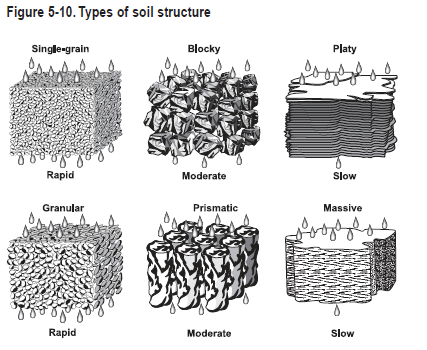
Soil Structure: This describes how soil particles are arranged into aggregates or "peds." Good structure (like granular or blocky) creates pores and pathways for water and air movement, which is essential for treatment. Poor structure (like massive or platy) can impede flow and aeration.
Soil Consistence: This refers to the soil's resistance to breaking apart. It's related to structure and can indicate compaction or problematic layers.
Depth to Limiting Layers: This is the depth from the bottom of the dispersal field to any layer that restricts water movement or treatment. This could be:
Bedrock: Solid rock.
Hardpan: A very dense, compacted soil layer.
Dense Glacial Till: Compacted material left by glaciers.
Slowly Permeable Clay: Soils with very high clay content.
Seasonal High Water Table (SHWT): The highest level that groundwater reaches during the wettest part of the year. Effluent must be treated in unsaturated soil above this level.
Excessively Coarse/Permeable Material: Like very coarse gravel or fractured bedrock, which might allow effluent to pass through too quickly without adequate treatment.
Presence of Mottling or Gleying: These are color patterns in the soil (often spots of grey, orange, or red) that can indicate past or present periods of water saturation and poor aeration, helping to estimate the SHWT.
Common Soil Types and Their Impact on Septic Systems:
While soil profiles are often complex combinations, here's a general idea of how different soil textures affect septic system design:
Sandy Soils (e.g., Coarse Sand, Loamy Sand, Sand):
Characteristics: Large particles, large pore spaces, drains very quickly.
Impact on Septic:
Pros: Generally good for accepting effluent quickly.
Cons: If too sandy or gravelly (excessively permeable), effluent can pass through too rapidly for adequate treatment, potentially contaminating groundwater. Requires greater vertical separation to limiting layers. May require pressure distribution with timed or micro-dosing to ensure slow, even application and better treatment.
System Choice: May require larger vertical separation, advanced dispersal methods (like mounds if shallow), or pressure dosing to control application rates.
Loamy Soils (e.g., Sandy Loam, Loam, Fine Sandy Loam):
Characteristics: A balanced mix of sand, silt, and clay. Considered ideal by many.
Impact on Septic:
Pros: Generally good permeability for accepting effluent and good filtering/treatment capacity. Supports healthy microbial populations.
Cons: Even loams can have variations; a proper assessment is still vital.
System Choice: Often suitable for conventional trench or bed systems (gravity or pressure dosed).
Silty Soils (e.g., Silt Loam, Silt):
Characteristics: Medium-sized particles, feel smooth or floury.
Impact on Septic:
Pros: Can provide good treatment due to smaller pore sizes.
Cons: Permeability is slower than loams. Can be prone to compaction if worked when wet. May require a larger dispersal field. Susceptible to "frost heaving" in cold climates.
System Choice: May require larger dispersal fields, pressure distribution, or advanced systems like Eljen GSF or sand mounds if permeability is too low or site conditions are constrained.
Clayey Soils (e.g., Clay Loam, Sandy Clay, Silty Clay, Clay):
Characteristics: Very fine particles, sticky when wet, hard when dry.
Impact on Septic:
Pros: Can provide excellent filtration if effluent can actually pass through.
Cons: Very slow permeability. Water drains extremely slowly, making it difficult for effluent to be absorbed. Prone to long-term saturation, which inhibits aerobic treatment and can lead to system failure. Some clays (expansive clays) shrink when dry and swell when wet, which can damage system components.
System Choice: Often unsuitable for conventional in-ground systems. Typically requires advanced solutions like sand mounds, specialized dispersal technologies designed for tight soils (which might involve Type 2 or Type 3 effluent), or evapotranspiration systems in very specific climates.
How Your ROWP Uses Soil Information:
System Type Selection: The soil's ability to accept and treat effluent is a primary driver for choosing between Type 1, Type 2, or Type 3 systems and the type of dispersal field (trench, bed, mound, etc.).
Sizing the Dispersal Field: Permeable soils can handle more effluent per square foot (higher Hydraulic Loading Rate - HLR) than less permeable soils. Your ROWP uses the soil assessment to determine the correct HLR, which directly impacts the size of your dispersal field. Slower soils require larger fields.
Determining Vertical Separation: The depth to a limiting layer dictates how much unsaturated soil is available for treatment. This is a critical measurement that can influence system design (e.g., requiring a mound if soil is shallow).
Construction Considerations: Your ROWP will advise on how to protect the soil during construction to prevent compaction and smearing, which can ruin its ability to function correctly.
In Conclusion:
Your property's soil is a complex, living filter that forms the heart of your septic system. A thorough, professional soil assessment by a qualified ROWP is the essential first step in designing a septic system that will be effective, compliant, and last for many years. Don't underestimate the power of dirt – it's what makes your onsite wastewater treatment possible!
